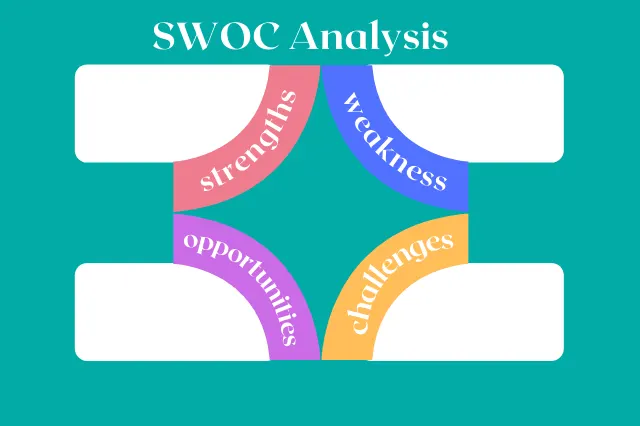
Here are a few steps which you can follow to do a quick SWOC analysis of yourself:
-
Identify Your Strengths:
Reflect on your achievements and skills. What do others often praise you for?
Consider your education, experience, and personal traits that contribute to your success.
-
Assess Your Weaknesses:
Be honest about areas where you struggle or lack proficiency.
Think about feedback you've received or areas where you've faced challenges.
-
Explore Opportunities:
Look at external factors that could benefit you. Are there new trends in your industry? Is there a network you can tap into?
Think about how you can capitalize on these opportunities to advance your personal or professional goals.
-
Analyze Challenges:
Identify external obstacles that could impact your goals. Consider market conditions, competition, or personal circumstances.
Think about strategies to address or mitigate these challenges.
-
Brainstorm:
Write down everything that comes to mind for each category. Don't filter yourself at this stage.
-
Categorize:
Organize your thoughts into the four SWOC categories. You might find some items overlap or fit into more than one category.
-
Prioritize:
Identify which strengths are most critical, which weaknesses need immediate attention, which opportunities are most promising, and which challenges are most pressing.
-
Develop Action Plans:
- Leverage your strengths: How can you use your strengths to achieve your goals?
- Overcome your weakness: What steps can you take to address or improve your weaknesses?
- Capitalize on opportunities: What actions can you take to take advantage of these opportunities?
- Address Challenges: What strategies can you develop to overcome or mitigate these challenges?
- Review and Update: Your SWOC analysis should be a living document. Regularly review and update it as your situation changes.